The internet has never been a static technology. From the early days of simple HTML pages to today’s interactive social platforms, cloud applications, creator communities, and decentralized technologies, the web has continuously evolved. The transition from Web 1.0 to Web 2.0 fundamentally changed how people use the internet, while the emerging concepts surrounding Web3.0 are attempting to redefine ownership, identity, data, and digital interaction once again.
Understanding this evolution is useful for anyone building websites, blogs, online communities, or digital businesses because the technologies and expectations surrounding the web continue to change.
What Was Web 1.0?
The earliest public web is often described as Web 1.0.
During this period, websites were generally much more static. Users primarily consumed information rather than actively creating it. Websites commonly consisted of HTML pages containing text, images, hyperlinks, and relatively simple navigation.
There were personal homepages, directories, corporate websites, forums, and early online communities, but publishing usually required considerably more technical knowledge than it does today.
The web was essentially a huge digital library.
You visited a website, read its content, followed links, and moved somewhere else.
The Arrival of Web 2.0
The term Web 2.0 became popular during the early 2000s and was associated with a shift toward interactive, participatory websites.
Instead of simply consuming content, users became creators.
Blogs, wikis, social networks, video-sharing websites, social bookmarking services, forums, comment systems, and other interactive platforms became increasingly important.
Web 2.0 transformed the internet from a collection of relatively static websites into a highly interactive environment.
Users could:
- publish blog posts
- upload photographs
- create videos
- comment on articles
- build online communities
- share links
- collaborate on documents
- create profiles
- rate content
- communicate in real time
The web became participatory.
Blogging Was a Major Part of Web 2.0
Blogging played an important role in the development of Web 2.0.
Platforms such as Blogger and WordPress made publishing significantly easier, allowing people without advanced programming knowledge to create websites and regularly publish content.
This helped create the enormous blogosphere of the 2000s.
Millions of independent publishers began writing about technology, politics, entertainment, travel, business, hobbies, personal experiences, and countless niche subjects.
The distinction between “website owner” and “internet user” began to disappear.
A person could be both a consumer and a publisher.
Social Media Took Web 2.0 Even Further
Social networking platforms eventually became one of the defining characteristics of Web 2.0.
Instead of visiting individual websites, users could create accounts on centralized platforms and interact with large communities through a common interface.
The model was extremely convenient.
Users could publish something once and immediately distribute it to followers or friends.
Photos, videos, comments, messages, and other forms of content could all exist within one ecosystem.
This dramatically increased the speed at which information could spread across the internet.
The Advantages of Web 2.0
Web 2.0 made the internet significantly more useful for ordinary users.
It lowered the technical barriers to publishing and communication.
Someone who knew nothing about HTML could create a blog.
Someone without video production infrastructure could upload videos.
Someone without a traditional publishing company could build an audience.
Small businesses could communicate directly with customers.
Communities could form around extremely specialized interests.
The result was an enormous expansion of online participation.
The Centralization Problem
However, Web 2.0 also introduced a major trade-off.
Many of the largest platforms became centralized.
Instead of users controlling their own websites and data, much of internet activity moved into a relatively small number of large technology platforms.
These companies operate the infrastructure, control platform rules, manage algorithms, store enormous quantities of user data, and determine how content is distributed.
This creates several important questions.
Who owns the data?
Who controls the platform?
What happens when an account is suspended?
Can users easily move their content elsewhere?
How transparent are recommendation algorithms?
How much control should a platform have over user-generated content?
These questions are part of the discussion surrounding the next potential evolution of the web.
What Is Web3.0?
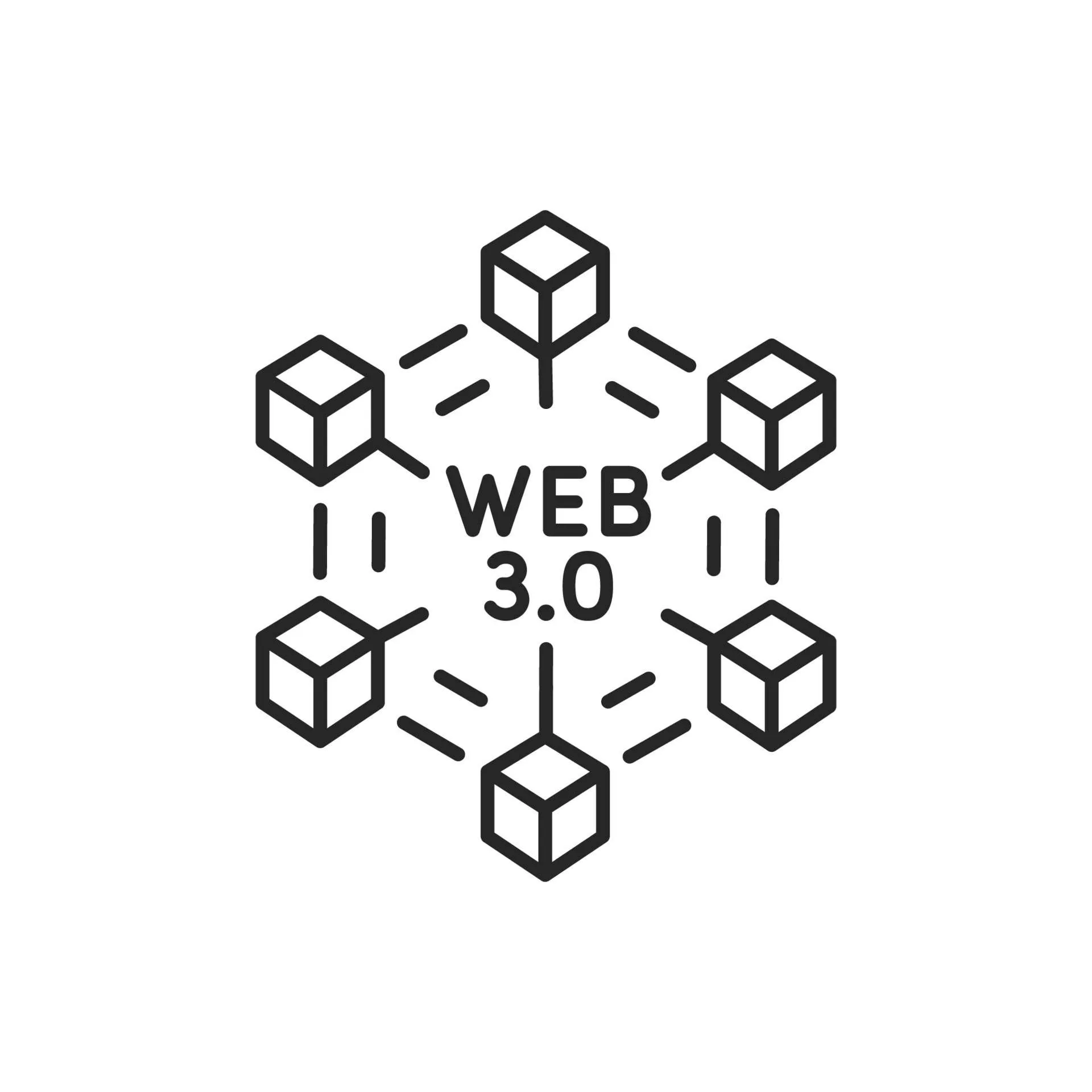
Web3.0, often shortened to Web3, generally refers to a vision of a more decentralized internet where users can have greater control over digital assets, identity, data, and online interactions.
The term does not describe one single technology.
Instead, Web3 is associated with several technologies and concepts, including:
- blockchain networks
- decentralized applications
- smart contracts
- digital wallets
- tokenized assets
- decentralized identity
- decentralized storage
- cryptocurrencies
- decentralized autonomous organizations
Different people use the term Web3 in different ways, and there is no universally agreed definition.
From Platforms to Protocols
One of the central ideas behind Web3 is moving some functionality away from centralized platforms and toward decentralized protocols.
In a traditional Web2 application, the company operating the platform controls the backend infrastructure.
A decentralized application can instead use blockchain networks or other distributed systems for important parts of its functionality.
The goal is to reduce dependence on a single intermediary.
In theory, this could allow users to interact with applications and services without relying on one company to control every part of the experience.
Digital Ownership
Another major Web3 concept is digital ownership.
In traditional Web2 environments, users can own accounts and create content, but the platform generally controls the underlying infrastructure and database.
Blockchain technology introduces a different model.
Digital assets can be associated with cryptographic wallets rather than exclusively with accounts controlled by a particular company.
This has applications in areas such as digital collectibles, gaming, memberships, financial assets, and tokenized ownership.
However, ownership models vary significantly between projects, and blockchain-based ownership does not automatically provide legal ownership of an underlying real-world asset.
Decentralized Identity
Identity is another area where Web3 could influence the future.
Today, users commonly maintain separate accounts across dozens or hundreds of websites.
A future decentralized identity system could potentially allow users to maintain greater control over credentials and identity information while using them across multiple services.
Instead of every platform maintaining its own isolated identity database, users could potentially carry certain credentials between applications.
This remains an evolving area, but the concept could significantly change how people interact with websites.
Web3 and Blogging
The relationship between Web3 and blogging is particularly interesting.
Web2 made blogging easy by providing powerful publishing platforms.
Web3 could potentially add new models for ownership, community participation, monetization, and identity.
Imagine a blog where readers can become community members, creators can directly monetize content, and certain digital memberships or assets can exist independently of the publishing platform.
Decentralized publishing could also potentially make content less dependent on a single centralized platform.
However, decentralized blogging does not necessarily mean that every part of the website must run on a blockchain.
A more realistic future may involve traditional web technologies combined with decentralized components where they provide a genuine advantage.
Web3 and Social Networks
Social networking is another area where Web3 concepts could have significant implications.
A decentralized social network could potentially allow users to maintain identity and social connections across different applications.
Instead of building a following entirely inside one company’s ecosystem, users could theoretically interact with multiple compatible services.
This could change the relationship between users and platforms.
A creator’s audience could become less dependent on one company.
A user could potentially move between compatible applications without completely rebuilding their online identity and network.
The Challenges of Web3
Web3 also faces substantial challenges.
Decentralization can introduce complexity.
Blockchain transactions can involve fees.
Wallet management can be confusing.
Lost private keys can create serious problems.
Some blockchain systems have faced scalability and energy-efficiency concerns, while other networks have developed different approaches to these issues.
Security is another major concern.
Smart-contract vulnerabilities, phishing attacks, wallet theft, scams, and fraudulent projects have demonstrated that decentralization does not automatically mean safety.
There is also considerable debate about whether every proposed Web3 application actually benefits from blockchain technology.
Web2 and Web3 May Coexist
The future may not be a simple transition from Web2 to Web3.
Instead, the two models may increasingly coexist.
Traditional web technologies remain extremely efficient for many applications.
HTML, CSS, JavaScript, databases, APIs, cloud computing, WordPress, and conventional hosting will continue to be useful.
Blockchain and decentralized technologies can potentially complement these systems when decentralization, verifiable ownership, or trustless transactions provide meaningful advantages.
The future internet could therefore be a hybrid environment rather than a complete replacement of Web2.
What Could the Future Internet Look Like?
The next generation of the web could combine the strongest characteristics of several generations.
From Web 1.0, it could retain the independence of personal websites and decentralized publishing.
From Web 2.0, it could retain social interaction, easy publishing, multimedia, and collaborative applications.
From Web3, it could incorporate stronger concepts of digital ownership, portable identity, decentralized infrastructure, and direct user participation.
Artificial intelligence could add another layer by making websites and applications more personalized, conversational, and automated.
The result could be an internet where websites are not simply pages or applications but intelligent and interconnected digital environments.
The Future of Independent Websites
Despite all the discussion surrounding Web3, independent websites may become even more important.
A personal domain gives a creator a stable identity that does not depend entirely on a social-media account.
A blog can remain accessible even as individual social platforms change their algorithms or business models.
For publishers, businesses, and creators, maintaining an independent web presence can therefore remain a valuable long-term strategy.
The future may involve a combination of:
independent websites + Web2 platforms + decentralized technologies + AI
rather than choosing only one of them.
Conclusion
Web 2.0 transformed the internet by turning users into active participants. Blogging, social media, video platforms, forums, and collaborative applications created a web where billions of people could publish, communicate, and build communities.
Web3.0 represents a different direction: an attempt to give users greater control over identity, digital assets, data, and online relationships through decentralized technologies.
Whether Web3 ultimately becomes the dominant model remains uncertain. Many proposed technologies are still developing, and some concepts may prove more useful than others.
What is clear is that the internet will continue evolving.
The fundamental idea behind every stage remains remarkably similar: give people better ways to create, communicate, connect, and exchange information.
The web of the future may not be purely Web2 or purely Web3. It could instead combine the openness of the early web, the participation of Web2, the decentralization of Web3, and the intelligence of emerging AI technologies into a new generation of the internet.